
An AC for the Bedroom: How to Choose a Quiet Model
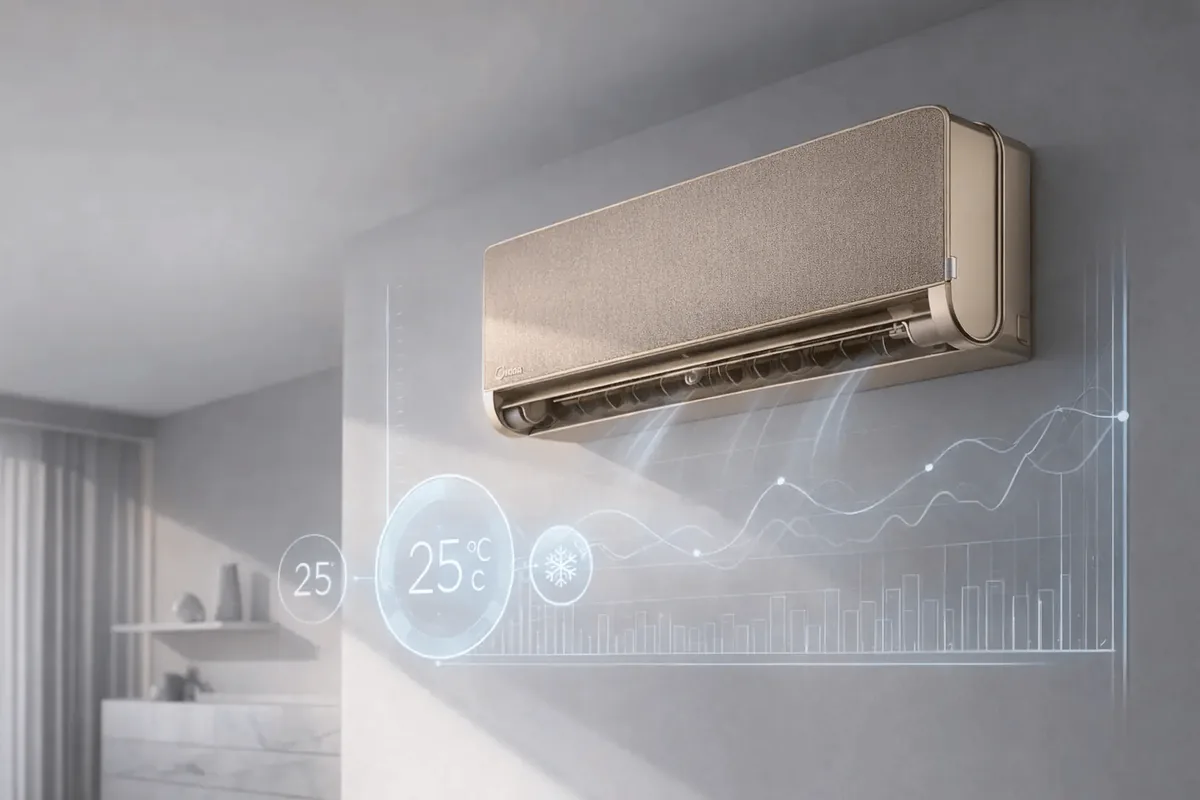
Why a bedroom has special requirements
During sleep the body is relaxed. Hearing sharpens. Temperature comfort is critical. An AC you don't notice in the living room by day can become torture at night in the bedroom.
Three things make a “bedroom AC” a category of its own:
- Noise at minimum fan speed
- A sleep mode that gently raises the temperature
- Airflow direction — not at the bed
Noise: 19 dB or 35 dB makes a world of difference
The key spec is noise at minimum fan speed, not maximum. The minimum is where the AC runs at night.
- 19–22 dB — quieter than rustling leaves. You don't hear it
- 24–28 dB — a whisper. Audible if you listen
- 30–34 dB — a quiet office. Keeps sensitive people awake
- 36+ dB — not suitable for a bedroom
Ordinary On/Off models start at 32–38 dB every time the compressor kicks in. At night, when that happens every 10–15 minutes, it's a source of chronic sleep loss. For a bedroom, look at inverter models.
We'll pick a quiet model for your bedroom
Tell us the room area — we'll show models from 19 dB with a sleep mode.
Find a modelSleep mode: how it works
In Sleep mode the AC does three things:
- Gently raises the set temperature by 1–2 °C over 4–6 hours — mimicking how the body cools naturally in sleep
- Switches the fan to minimum speed
- Dims or turns off the display and the beeps
The result: you fall asleep in the cool and wake up comfortable, without that “ice box” feeling before dawn.
Placement: where to mount it so it doesn't blow on the bed
A direct stream of cold air on a sleeper means colds, muscle aches and a runny nose. The right options:
- Above the headboard — the airflow travels away from the bed along the ceiling
- On a wall perpendicular to the bed — the louvres direct the air along the ceiling
- Absolutely not: opposite the bed, blowing straight at it
Cold air is heavier than warm. Aim the flow along the ceiling and it descends evenly across the whole room. No draughts.
Capacity: no more than you need
A bedroom is usually 12–18 m². For that area 7,000–9,000 BTU is enough.
A common mistake: fitting 12,000 BTU in 14 m² “to be safe”. The unit cools the room fast and switches off. Ten minutes later it switches on again. The cycle repeats all night. Every restart is start-up noise and a temperature swing.
The rule: slightly less is better than noticeably more. An inverter compensates for a small capacity shortfall with smooth running.
Recommended models from our catalogue
- Midea BreezeleSS+ — 20 dB at minimum, a “Silent sleep” function, smart airflow control
- Midea Xtreme Save — 22 dB, class A++, a sleep mode with a gradual temperature change
Both are inverter, with R32, Wi-Fi and a sleep mode. See them in the Midea catalogue — delivery and professional installation across Tbilisi.