
A Multi-Split System for an Apartment: Pros and Cons
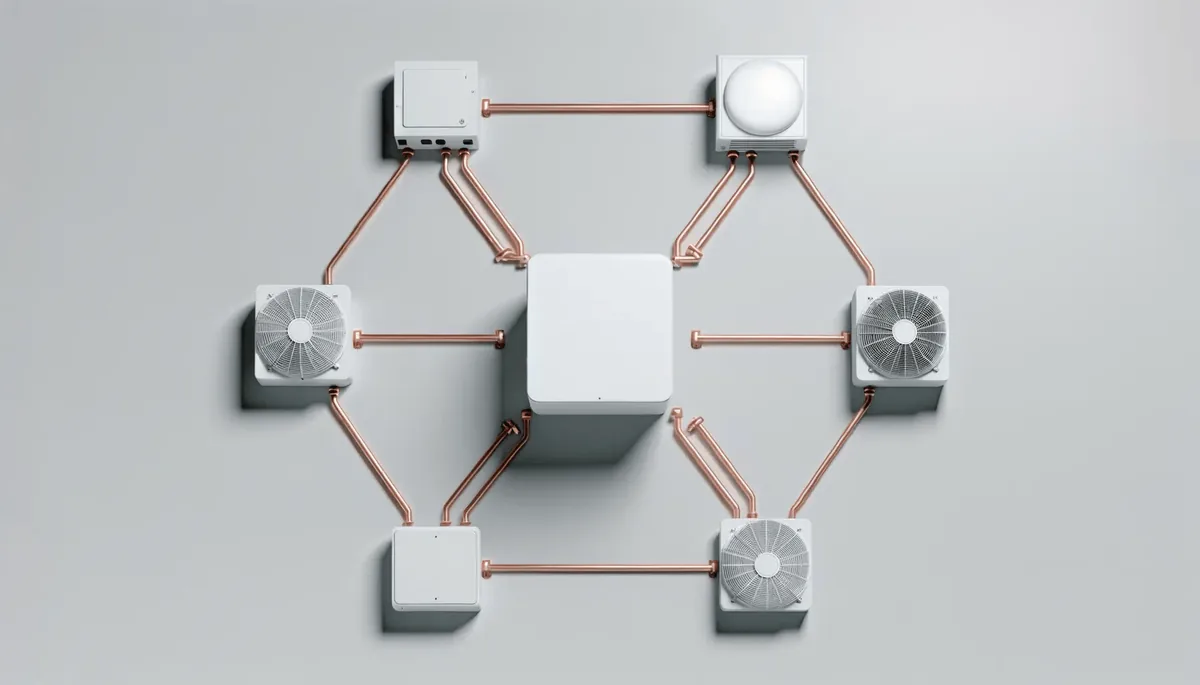
What a multi-split is
One outdoor unit — 2–5 indoor units in different rooms. Each with its own remote, each working independently. The outdoor unit is more powerful than usual and sits on a balcony or facade.
The idea is simple: why hang three outdoor units on the facade if one will do?
The main advantage: a clean facade
In Tbilisi this is more than aesthetics. New builds set strict rules: the building management may limit the number of units on the facade, or ban them altogether.
A multi-split solves it:
- One outdoor unit instead of 2–3
- One hole through the wall (the copper lines are routed inside)
- A tidy-looking facade
Savings on installation
- One set of brackets instead of two or three
- One facade drilling
- One rope-access job (if it's a high floor)
But honestly: the copper lines from one unit to several rooms are longer than with separate systems. That partly eats into the installation savings.
The downsides salespeople keep quiet about
Dependence on a single unit
If the outdoor unit fails, the whole apartment loses air conditioning. With separate systems, one failed unit leaves the rest working.
Mode limitations
Not all models support running in different modes at once: cooling in the living room and heating in the bedroom. If that matters, check for a “Cool & Heat simultaneous” function.
Load on the compressor
If all the indoor units run at maximum at the same time, the combined demand can exceed what the outdoor unit can deliver. Careful sizing solves this, but it takes calculation.
When a multi-split is the best choice
- 3+ rooms that need an AC
- A new build with facade restrictions
- A renovation before the final finishes — the lines are run inside the walls
Prices: a 2-to-1 system from 3,500 GEL, a 3-to-1 from 5,000 GEL installed.
We'll cost both options for your apartment
Multi-split or separate systems — we'll send two quotes with equipment and installation costs.
Get a quoteWhen separate splits are better
- A 2-room apartment — two separate inverters are often cheaper
- Rooms far apart (a line >15 m)
- A limited budget — systems can be added in stages
- Independence matters: one failure doesn't affect the others
There's no universal answer. We'll help cost both options and pick the best one — get in touch.