
Why AC Lines Are Best Laid Before the Renovation
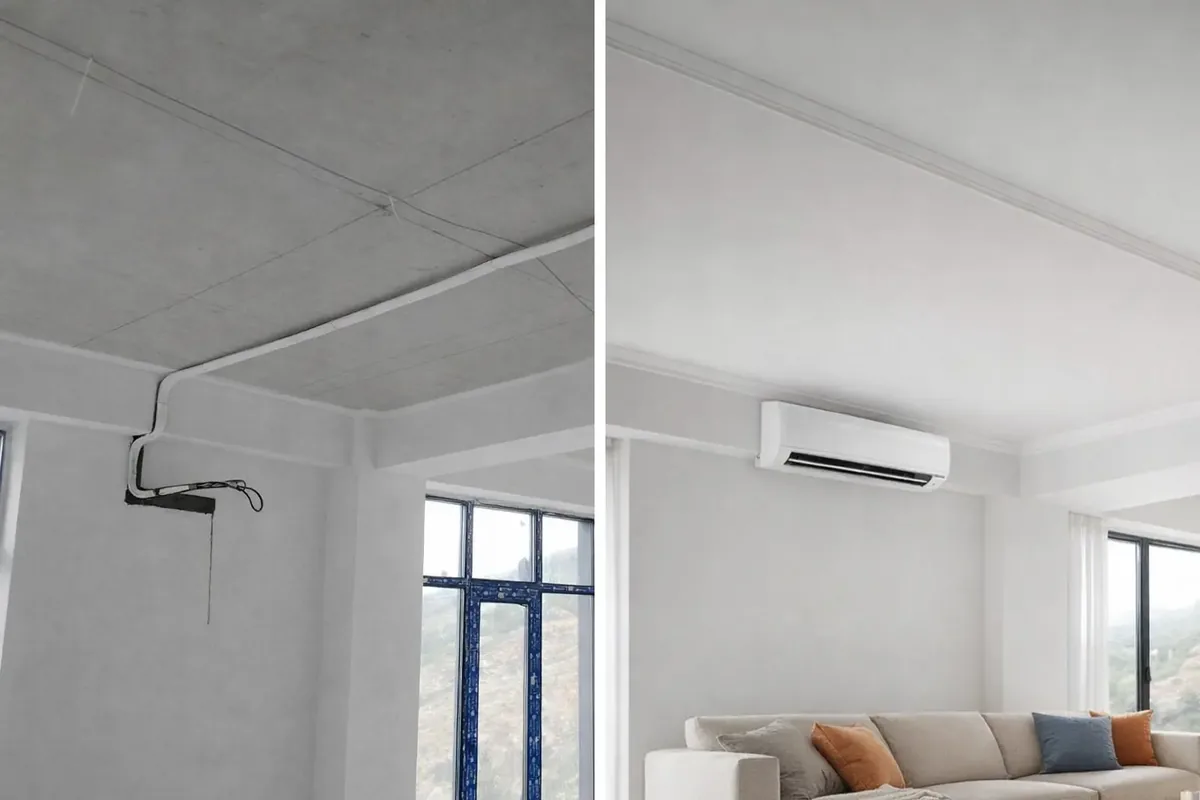
When people think about installing an air conditioner, most picture only the units — indoor and outdoor. But between them runs a copper line: two refrigerant pipes, a drain and an electrical cable. When and how these are laid determines how the room looks, what the work costs and how long the system lasts.
What an AC line is
The line is the link between the indoor and outdoor units of a split system. It includes:
- Two copper pipes (liquid and gas lines) for the refrigerant to circulate
- A drain hose to carry away condensate
- An inter-unit electrical cable
- Insulation on each pipe to prevent losses and condensation
A standard line is 3 to 7 metres, but in tricky cases it can reach 15–20 metres. The longer the route and the more bends, the more the quality of the work matters.
Why the line should be laid before the finishes
There's a simple rule: anything hidden in the wall goes in before the plaster. The copper line is exactly that kind of utility. Here's what early routing gives you:
1. Concealed routing without trunking
The pipes are set into a chase (a channel in the wall) and fully hidden under the plaster. Nothing shows on the outside — no pipes, no plastic trunking. The interior stays clean and the designer has a free hand.
2. The optimal route
With bare walls the engineer runs the line by the shortest path — without detouring around furniture, cornices or stretch ceilings. A shorter line means less pressure loss, higher efficiency and lower running costs.
3. Budget savings
Chasing into bare concrete or brick is cheaper than opening up finished surfaces. Run the line after the renovation and you'll have to cut tile, plasterboard or plaster and then make it good again. The difference can be 30–50% of the price of the routing itself.
4. Proper drainage
The drain line must run on a slope so condensate flows by gravity. Before the finishes it's easy to set the right angle and route the drain to the sewer or the facade. After the renovation you often need a pump — extra noise, maintenance and a point of failure.
5. Less mess and noise
Chasing means dust, vibration and the noise of a rotary hammer. During the rough-work stage nobody minds. In a finished apartment with furniture and appliances it's a whole event.
Renovation already underway?
An engineer will come before the plastering, measure the routes and prepare a routing plan.
Book line installationWhat happens if you run the line after the renovation
Technically you can install an AC at any stage. But once the walls are closed, the options are limited:
- The line runs outside along the wall in plastic trunking — visible and spoiling the interior
- A longer route — around finishes, furniture and door trims
- Chasing a finished wall damages the surface and needs making good
- A pumped drain instead of gravity — extra cost and maintenance
- The work costs more because of the demolition and restoration of finishes
Exactly when to lay the line: tied to the renovation stages
- Stripping the old finishes — decide where the units will go. Agree it with the designer.
- Electrics and plumbing — this is the stage to lay the lines. The chases are cut at the same time as the electrical channels.
- Plastering — covers the line. After this step concealed routing is no longer possible without opening up.
- Final finishes — paint, tile, wallpaper. The line is already inside the wall.
- Mounting the units — the indoor and outdoor units go in at the end of the renovation or after it. Connecting to a pre-laid line takes 2–3 hours.
What makes up the cost of routing
The price of laying a line depends on several factors:
- Route length — the longer it is, the more material and work
- Pipe diameter — depends on the AC's capacity (BTU). Domestic 7–12K BTU splits use 6/10 pipe; powerful 24–36K BTU units use 10/16 and 10/19
- Copper grade — standard or Halcor (premium, thicker wall, longer life)
- Route complexity — number of bends, wall penetrations, working height
Indicative prices in Tbilisi run from 110 GEL per linear metre (standard 6/10 copper) to 190 GEL per metre (Halcor 10/19 for powerful systems). The price includes chasing, insulation, brazing and fixings. The full price list is on our refrigerant lines page.
Frequently asked questions
Can I lay the line and buy the units later?
Yes, that's standard practice. The line is sealed and pressure-tested with nitrogen — it will wait to be connected for months or even years. The main thing is to know the location and capacity of the future AC so the right pipe diameter is laid.
How many lines does an apartment need?
One per indoor unit. For a two-room apartment you'd usually lay 2–3 lines: bedroom, living room and, if wanted, the kitchen. For a multi-split, all the lines run to a single outdoor unit.
What if I don't know which AC I'll buy?
The engineer calculates the required capacity from the room's area and orientation. The line is laid to the calculated diameter. 90% of domestic models use the same pipe sizes — you're not tied to a particular brand.
Does the drain have to go to the sewer?
Ideally — yes. A drain to the sewer needs no maintenance and runs silently. The alternative is the facade, but that's less tidy and may bother the neighbours. A drain pump is a last resort, when gravity drainage isn't possible.
Checklist: preparing for line installation
- Decide the number and location of the indoor units
- Choose a spot for the outdoor unit (balcony, facade, roof)
- Agree the line routes with the designer and electrician
- Call an HVAC engineer before the plastering begins
- Allow for an electrical line for each AC
- Decide where the drain goes — sewer or facade
Bottom line
Laying the lines is 20–30% of the cost of the whole air-conditioning system. But it's what decides whether the installation is tidy or whether you'll be hiding pipes in trunking. Lay the lines during the rough-work stage — it's cheaper, cleaner and more reliable.
If your renovation is underway or just being planned — get in touch. An engineer will come, measure the routes and prepare a routing plan before the finishing work starts.